Nittanya Auto Nittanya Auto

Why Does Steering Wheel Shake When Braking at High Speeds?

Time:2026-09-19 Author:Aria
0%

A steering wheel that trembles during a fast stop can feel like a warning delivered through your fingertips. The question, “why does steering wheel shake when braking at high speeds,” usually involves brake, tire, wheel, or suspension problems. Brake rotor thickness variation can push the pads unevenly. A sticking caliper may create heat, discoloration, and a sharp burning smell. Bent wheels, loose lug nuts, worn tie-rod ends, and damaged tires can also amplify vibration through the steering system.

The problem is not always the rotor.

The National Highway Traffic Safety Administration’s Tire Safety guidance recommends checking inflation pressure, tread condition, sidewall damage, and wheel security regularly. Its safety materials show why tire condition deserves attention before blaming the brakes. The Federal Highway Administration also reports that pavement quality, vehicle loading, and road surface conditions affect braking performance and vehicle control. AAA research on vehicle maintenance consistently links neglected inspections with avoidable roadside failures, although vibration diagnosis still requires hands-on testing. A qualified technician should measure rotor runout, inspect pad deposits, check wheel balance, and test suspension joints. Do not rely only on visual inspection. A vehicle can look normal while producing dangerous shake at 70 mph. My own caution is simple: replacing rotors immediately may solve nothing if a worn hub or tire caused the vibration. Record when the shaking begins, whether the brake pedal pulses, and whether the vehicle pulls left or right. Those details help separate a brake issue from a broader handling fault. Consistent maintenance matters. Your hands are already reporting a problem.
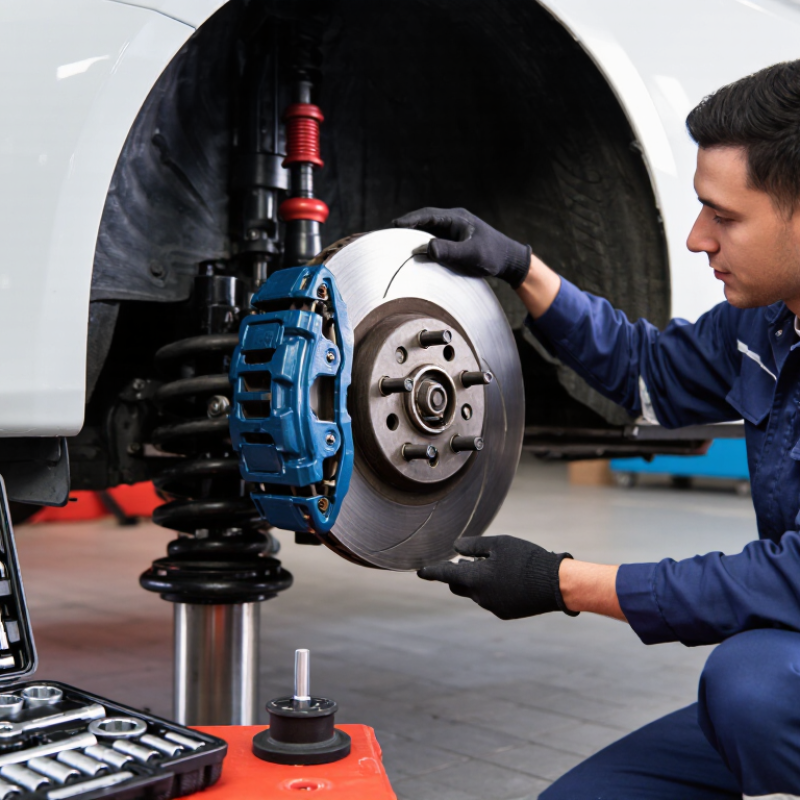
Why Does Steering Wheel Shake When Braking at High Speeds?

What Steering Wheel Shake During High-Speed Braking Indicates

Why Does Steering Wheel Shake When Braking at High Speeds?

What Steering Wheel Shake During High-Speed Braking Indicates

A shaking steering wheel during high-speed braking usually points to a problem at the front wheels. The most common cause is uneven brake disc thickness. As the disc rotates, thicker and thinner areas push the brake pads apart. That movement travels through the caliper, suspension, and steering wheel.

It can feel like a rapid tremor at 90 km/h, then become stronger near a stop. A pulsing brake pedal often appears with it. Do not assume the discs are simply “warped.” Excessive heat, uneven pad deposits, incorrect wheel fastening, or poor disc bedding can create similar symptoms. The distinction matters. Replacing parts without measuring them wastes money.

A careful inspection should check disc thickness, lateral runout, pad condition, caliper slide movement, wheel bearing play, and tire balance. A loose suspension joint can make the shake worse. So can a damaged tire. If the wheel shakes only while braking, the braking system deserves priority; if it shakes while cruising, inspect the wheels and tires too. In practical diagnosis, a road test followed by precise measurements is more reliable than visual guessing. I have seen clean-looking discs fail runout checks. That is easy to miss. Stop driving hard if the steering becomes unstable, the vehicle pulls sharply, or braking distance increases. Have a qualified technician inspect it before further high-speed travel.

What Steering Wheel Shake During High-Speed Braking Indicates

This chart shows estimated front-wheel rotational frequency at different road speeds, based on a typical tire diameter of 0.66 m. If steering-wheel vibration appears only during braking, especially at higher speeds, the braking force is exposing a problem such as brake-disc thickness variation, disc runout, uneven pad deposits, wheel imbalance, tire damage, or worn steering and suspension components. The vibration usually follows road speed rather than engine speed.

How Brake Disc Warping and Uneven Wear Cause Steering Vibrations

Why Does Steering Wheel Shake When Braking at High Speeds?

At high speeds, steering vibration often comes from uneven brake-disc wear. Many drivers call this “warping,” but the disc may not be visibly bent. Uneven thickness, often called disc thickness variation, changes braking force during each wheel rotation. The pads grip, release, and grip again. That pulsing travels through the caliper, hub, steering knuckle, and wheel.

The first guess is often wrong.

In workshop inspections, a dial gauge can reveal lateral runout that the eye cannot see. Common service limits vary, but readings around 0.03 to 0.08 millimeters may create noticeable judder on some vehicles. Uneven pad transfer can also form dark friction patches on the disc surface. Heat makes the problem worse, especially after repeated hard braking followed by a stationary stop.

DVSA’s 2023–24 MOT statistics covered more than 35 million tests and continued to identify brake performance as a major inspection category. TÜV’s 2024 vehicle inspection reporting also lists brake components among recurring safety defects. These reports do not prove every shake comes from the disc. Wheel imbalance, loose suspension joints, worn steering components, and hub runout can produce similar symptoms.

A careful technician should measure disc thickness, runout, hub faces, pad condition, and caliper movement. Cleaning the hub matters. Rust between the hub and disc can create false runout. I have seen parts replaced too quickly, while a small mounting-surface problem remained. That mistake deserves more attention.

Other Suspension, Tire, and Wheel Problems Behind the Shaking

A shaking steering wheel during high-speed braking is often blamed on warped brake rotors. That explanation is incomplete. Worn suspension and steering parts can create the same pulsing sensation. Loose tie-rod ends, damaged ball joints, or tired control-arm bushings may let the wheel move under braking force. The steering wheel can then tremble, especially on uneven roads.

Tires and wheels deserve equal attention. Uneven tire wear, a separated internal belt, low pressure, or a bent wheel can cause vibration before braking begins. At higher speeds, a small imbalance feels much stronger. I once found a vibration caused by one wheel carrying packed mud inside its rim. It looked harmless, but it changed the wheel’s balance noticeably. Diagnosis is not always neat.

Tips: Note when the shaking starts. Does it appear only while braking, or also during cruising? Check tire pressure, tread wear, and visible wheel damage. A technician should inspect wheel balance, suspension joints, bushings, and brake components. Do not rely on replacing one part without testing the rest. A road test, lift inspection, and runout measurement provide better evidence. If the vehicle pulls sharply, makes clunking sounds, or shakes violently, reduce speed and arrange a professional inspection. Small symptoms can become expensive problems.

How to Diagnose Steering Wheel Vibration When Braking

Why Does Steering Wheel Shake When Braking at High Speeds?

A shaking steering wheel during high-speed braking usually points to a problem at the front wheels. I have often found uneven brake rotor surfaces during workshop inspections. Heat can create thickness variation, which pushes the brake pads back and forth. The driver feels this movement through the steering wheel. A sticking caliper may create similar symptoms. So can loose wheel bearings or worn suspension joints.

Begin the diagnosis on a safe, quiet road. Note when the vibration starts and whether it changes with braking pressure. A pulsing brake pedal suggests rotor variation. Steering-wheel movement may indicate a front-end issue. Check the tires for uneven wear, bulges, and incorrect pressure. Do not ignore a recent wheel impact. It may have bent a rim or disturbed the alignment.

Remove the wheel only after securing the vehicle properly. Inspect pad contact, rotor discoloration, and caliper movement. A technician can measure rotor runout with a dial indicator and check thickness at several points. Wheel fasteners also need accurate, even torque. I once blamed the rotors too quickly; a worn suspension bushing was the real cause. That mistake matters. Replacing parts without measurements wastes money and can hide the original fault.

If vibration feels severe, braking becomes uneven, or the vehicle pulls sideways, stop driving and arrange a professional inspection.

When to Stop Driving and Seek Professional Brake Inspection

Why Does Steering Wheel Shake When Braking at High Speeds?

When to Stop Driving and Seek Professional Brake Inspection

A shaking steering wheel during high-speed braking often signals uneven braking force. Warped rotors, worn pads, or loose suspension parts can cause it. The vibration may pulse through your hands as the vehicle slows. It can also worsen after repeated braking on a steep road.

Stop driving as soon as the shake becomes severe. Do not ignore a vehicle that pulls sharply left or right. A soft brake pedal is another serious warning. So is a grinding sound. These symptoms can indicate reduced stopping power or damaged components. A burning smell, smoke near a wheel, or leaking fluid requires immediate professional attention. Park safely and arrange a qualified inspection.

A brief vibration does not always mean the brake rotor is warped. Tire problems, wheel bearings, and steering joints can feel similar. Diagnosis requires measuring rotor runout and checking pad wear, caliper movement, wheel torque, and suspension play. Never rely on a visual check alone. I have seen drivers postpone repairs because the car still stopped. That assumption can fail suddenly. If the steering wheel shakes repeatedly, especially above highway speeds, choose inspection before another long trip. Your stopping distance may already be changing.

Why Does Steering Wheel Shake When Braking at High Speeds? — When to Stop Driving and Seek Professional Brake Inspection

Observed Symptom Possible Cause Risk Level Recommended Action
Steering wheel shakes mainly when braking from highway speeds Brake disc thickness variation, disc runout, uneven deposits, or a sticking caliper Moderate to high Arrange a professional brake inspection soon. Avoid repeated high-speed braking until the cause is confirmed.
Brake pedal pulses at the same time as the steering wheel shakes Variation in the rotating brake assembly or an improperly seated disc Moderate to high Have disc runout, thickness variation, wheel torque, and caliper operation measured rather than replacing parts based only on symptoms.
Vehicle pulls left or right during braking Uneven braking force, a seized caliper, restricted brake hose, unequal tire pressure, or suspension wear High Reduce speed carefully and seek inspection promptly. Stop driving if the pull is sudden, severe, or difficult to control.
Shaking occurs even when the brake pedal is not pressed Wheel imbalance, a damaged tire, bent wheel, worn steering component, or wheel-bearing problem Moderate to high Avoid high speeds and request a tire, wheel, steering, and suspension inspection.
Steering wheel shake begins after fitting a wheel or changing a tire Wheel imbalance, incorrect wheel seating, loose lug nuts, or a damaged tire High until checked Do not continue at highway speed. Check for visibly loose hardware only if safe, then obtain an immediate professional inspection.
Burning smell, smoke, or one wheel feels much hotter than the others Dragging brake pad, seized caliper, blocked hose, or overheated brake component Critical Stop driving as soon as it is safe. Keep away from hot components and arrange roadside assistance or a tow.
Grinding, metal-on-metal noise, or severe scraping during braking Brake friction material may be worn through, allowing metal contact with the disc Critical Stop driving except to move out of immediate danger. Have the vehicle towed for a complete brake inspection.
Brake warning light, low fluid, or a soft or sinking pedal Hydraulic leak, air in the system, worn components, or a brake-system fault Critical Do not drive. Stop safely and seek immediate professional assistance.
Mild vibration only during occasional hard braking, with no warning signs Temporary heat-related variation, surface deposits, or an early-stage brake or wheel issue Moderate Drive gently only if the vehicle remains controllable and no red flags are present; schedule an inspection if the vibration returns.
Vibration is getting stronger, braking distance has increased, or the vehicle feels unstable A developing brake, tire, steering, suspension, or wheel problem Critical Stop driving and arrange a professional inspection or tow. Do not rely on repeated braking tests at high speed.
Safety note: A shaking steering wheel during braking can involve the brakes, tires, wheels, steering, or suspension. The severity cannot be confirmed from symptoms alone. If control is reduced, a warning light appears, the pedal feels abnormal, or there is smoke or a burning smell, stop driving and seek professional assistance.

FAQS

Why does the steering wheel shake when braking at high speeds?

Uneven brake-disc thickness can change braking force during each wheel rotation. The pads grip, release, then grip again. This pulsing reaches the steering wheel.

Is a brake disc always visibly warped?

No. A disc may look straight but still have uneven thickness or slight lateral runout. A dial gauge can reveal movement that your eyes cannot.

What other problems can cause braking vibration?

Loose tie-rod ends, worn bushings, damaged ball joints, wheel-bearing play, or hub runout can create similar symptoms. The first guess is often wrong.

Can tires or wheels cause shaking before braking?

Yes. Check tire pressure, uneven tread wear, bulges, bent rims, and wheel balance. Packed mud inside a rim can also create noticeable vibration.

How can a technician diagnose the real cause?

The inspection should measure disc runout and thickness at several points. It should also check the hub face, pads, caliper movement, suspension joints, and wheel balance.

Why does cleaning the hub matter?

Rust between the hub and disc can hold the disc slightly crooked. This creates false runout. A small mounting-surface problem can survive unnecessary parts replacement.

Does heat make brake vibration worse?

Repeated hard braking can heat the disc and pads. Stopping immediately afterward may leave uneven friction patches on the disc surface.

What should I do if the vehicle pulls or shakes violently?

Reduce speed and arrange a professional inspection. Stop driving if braking becomes uneven, clunking appears, or the steering wheel moves violently. Small symptoms can become expensive problems.

Conclusion

If you are wondering, “why does steering wheel shake when braking at high speeds,” the vibration usually indicates that braking force is not being applied evenly. The most common cause is a brake disc with uneven thickness, heat-related distortion, or irregular wear. When the brake pads clamp onto these inconsistent surfaces, pulsations travel through the suspension and into the steering wheel. The problem may become more noticeable during firm or repeated braking.

Other possible causes include worn suspension components, loose or damaged wheel parts, tire imbalance, uneven tire wear, or wheels that are not properly aligned. To diagnose the issue, a qualified technician should inspect the brake discs and pads, check wheel installation and tire condition, and test suspension and steering components for looseness. If the shaking is severe, braking feels unstable, the vehicle pulls to one side, or unusual noises appear, stop driving when it is safe and arrange a professional brake inspection promptly.

Aria

Aria

Aria is a dedicated marketing professional with a deep passion for innovative strategies and a keen understanding of our company's product offerings. With a wealth of experience in the industry, Aria excels at crafting engaging content that highlights the unique features and benefits of our......